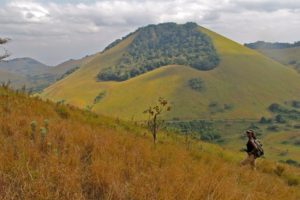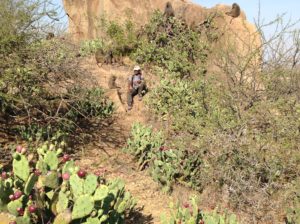
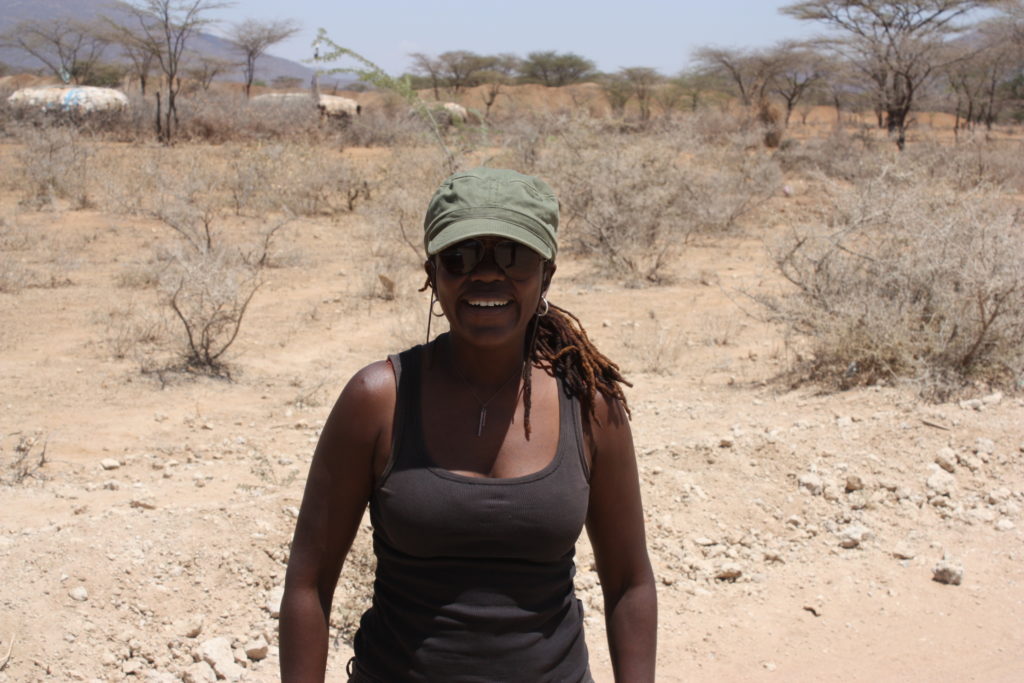
My research focusses on the interrelationships between changes in climate-land use and their influence on patterns of mammal diversity and human adaptive strategies in response to these environmental changes. Such integrated driven data, is crucial for understanding factors that not only promote both ecological and social resilience but also vital for understanding their influence land use decisions to inform policy. This line of interest stems from previous research experience on evaluating the population dynamics of the endemic and endangered Tana River Red Colobus (Procolobus rufomitratus) and Tana River Crested mangabeys (Cercocebus galeritus), and evaluation of their habitat status. This background evolved towards carrying out biodiversity surveys on both the Chyulu Forest Hills ecosystems in South-Central Kenya as well as carrying out extensive small mammal surveys integrated with externally sourced large mammal aerial surveys on the Laikipia ecosystem (North-central Kenya) to evaluate anthropogenic impacts on wildlife, and evaluation of ecosystems services to guide biodiversity conservation strategies for these regions in Kenya.
Laikipia County has a range of seven different land use systems (i.e., managed to protected forests, communal owned pastoralist lands, privately owned commercial ranches, large-scale/small scale farmlands and both communal and commercial ranches with land put aside for conservancy to promote tourism make up the mosaic landscape of this region in Northcentral Kenya. Research findings suggests that certain land use practices appear to impact mammal diversity and prevalence of zoonotic infection. The various datasets on land use, small mammal diversity, NDVI (vegetation species richness indices) were integrated into an ecological model using binomial GLMM analysis to examine the interrelationship between climate and land use effects on small mammals and zoonotic disease. Our studies found climate and land use can affect the prevalence of zoonotic diseases by conducting a conducive environment for pathogens, their vectors, and their reservoir’s host. In addition, land use increase or decrease the interface for pathogen transmissions between different species. The overall ecological model findings suggest that aridification and global warming due to climate change will increase zoonosis incidences as well as reduce species diversity and specifically evenness which can also increase incidences of zoonosis. This information has contributed towards public health awareness workshops and informed policy.
https://www.sfu.ca/sustainabledevelopment/