I am interested in biodiversity in its broadest sense and how it evolves. I have a particular fondness for amphibians and reptiles (including birds) and their conservation and have recently been concentrating my efforts on the threats posed to Western Cape biodiversity by invasive alien species and altered fire regimes.
In the Western Cape Province of South Africa there has been a serious invasion of the catchment areas of human introduced invasive alien pines and other tree species which increases shade relative to indigenous vegetation (not good for most reptiles), outcompetes indigenous vegetation (which directly reduces plant diversity and negatively affects the animals which are adapted to the indigenous vegetation), increases fuel load during fires which can lead to hotter an longer-burning fires which again affects plants and animals negatively and finally seriously reduces surface water runoff which is bad for biodiversity and people living in water-stressed area.
We are interested in understanding the functional roles of snakes in African ecosystems. Our research spans multiple biomes and includes a wide diversity of snake species. Through our research and outreach initiatives, we strive to facilitate the conservation of snakes by raising awareness, appreciation, and overall understanding.
I am the Founder and Managing Director of Reptile and Amphibian Program – Sierra Leone (RAP-SL). I work towards the documentation, protection and conservation of reptiles and amphibians of Sierra Leone and also do take action for the protection and conservation of Sierra Leone’s biodiversity especially threatened and endangered species in the country.
Farming and mining are the key activities impacting the population of species in Sierra Leone. These activities, in combination with other human influences have resulted in habitat degradation thereby resulting in species depletion. The impact of habitat degradation and decreased species populations on human well-being is immense within the region. Most of the above activities are contributing to global warming and climate change thereby affecting the well-being of humans. The sad thing about the large scale farming and mining is that about 99% of the products are exported while locals (human and wildlife) remain to suffer the consequences of the activities.
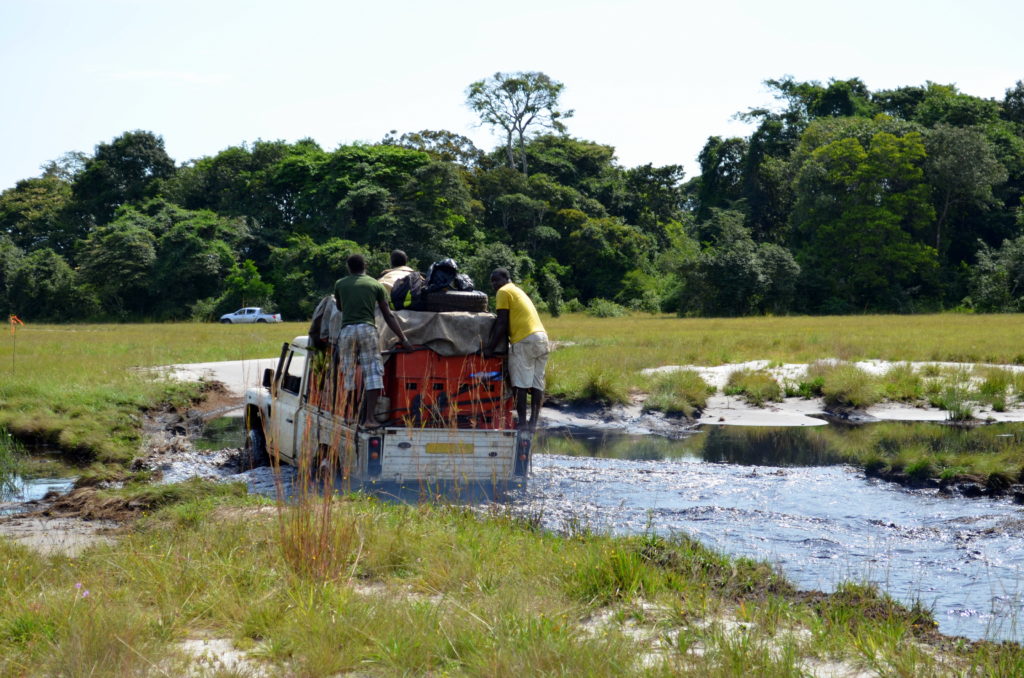
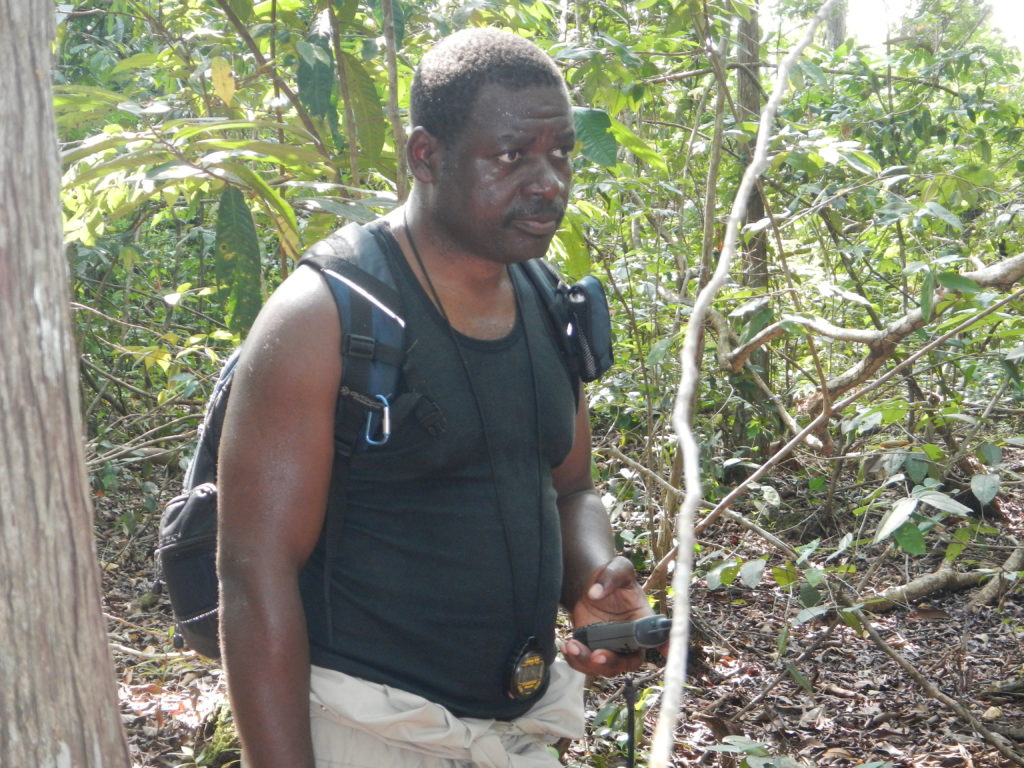
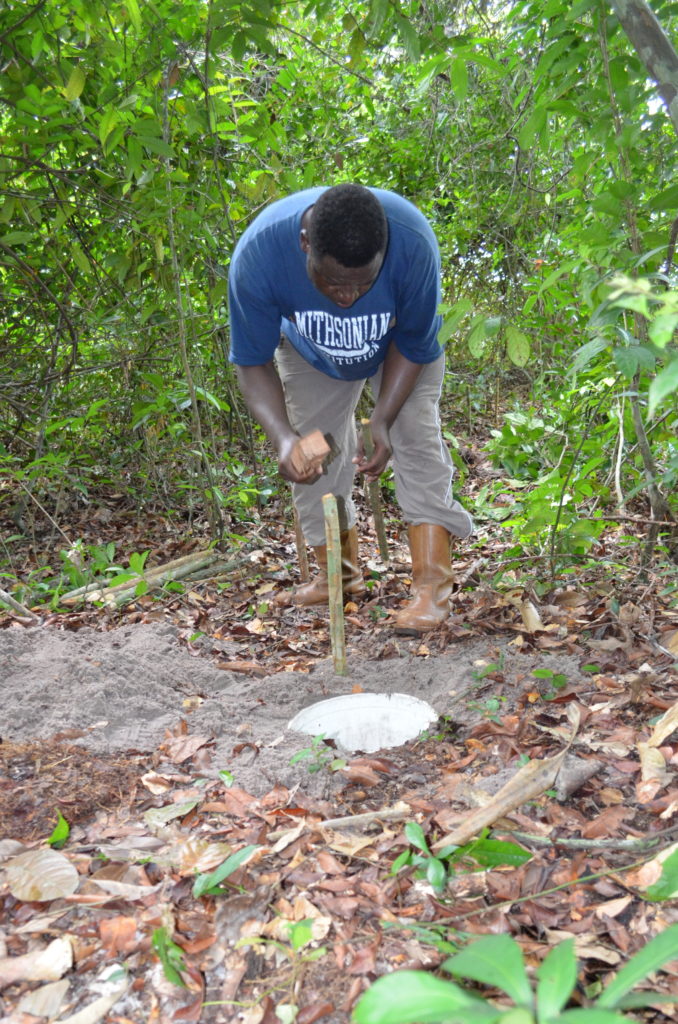
Elie Tobi has been involved in the Reptiles and amphibian’s assessment in Gabon in the Gamba Complex of Protected Areas and along the Ogooué River course. These studies fostered the following:
1- Increasing the biodiversity knowledge
2- Understanding of the processes between human activities and ecosystems
3- A tool for biodiversity management through recommendations to the companies and national environment managers.
4- A useful baseline of data for biodiversity monitoring.
5- A tool for awareness and education raising.
6- Determining key areas for conservation and establishing conservation priorities.
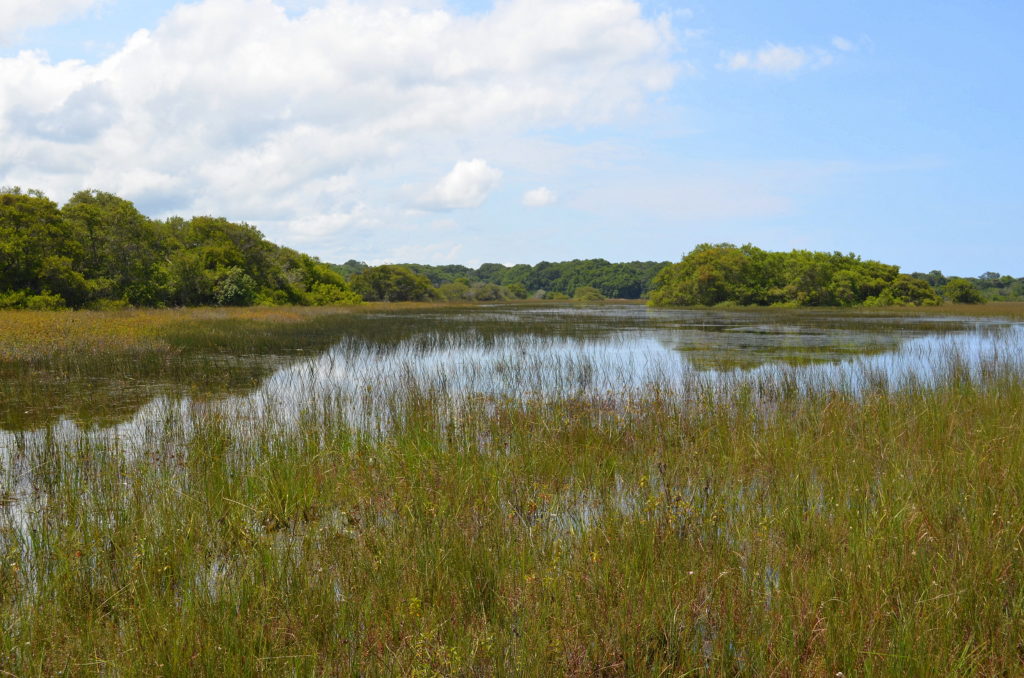
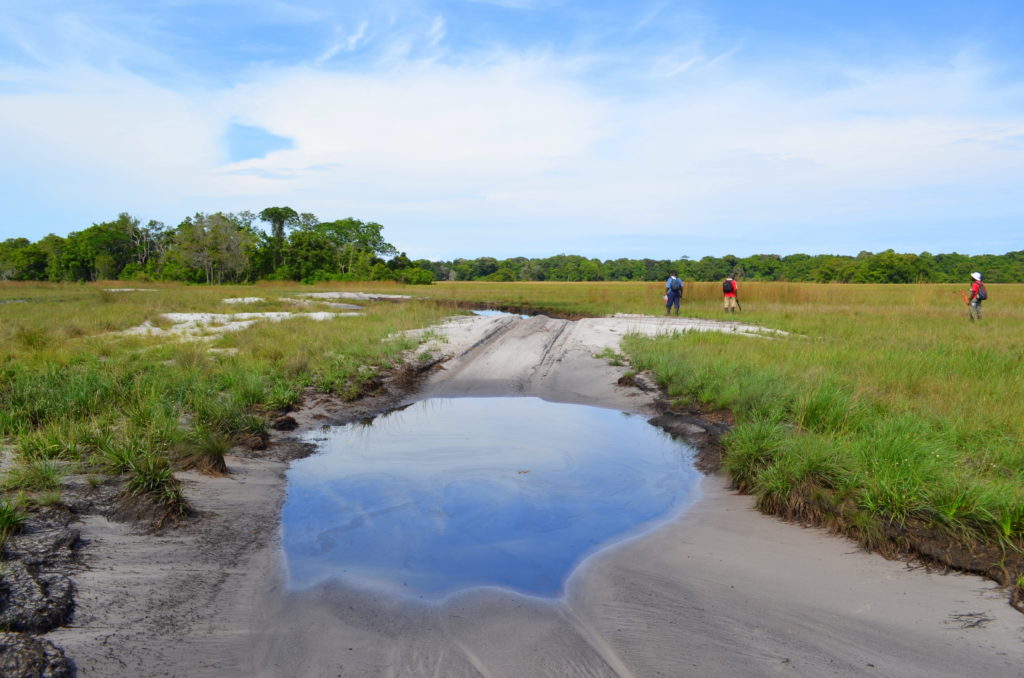
Gabon is on central west coast of Africa (Lee et al. 2006). In 2000, Shell-Gabon entered into a partnership with Smithsonian Institution, Monitoring and Assessment of Biodiversity to raise and increase the biodiversity knowledge in order to assess the impact of the hydrocarbon activities in the Gamba Complex of Protected Areas (CAPG) and make recommendations to monitor and mitigate human activities disturbances. Before the nineteen sixties, there was no town called Gamba. With the discovery of oil in the area in the sixties, people converged from around the world and settled in Gamba, a remote locality in the southwest of the country. The demography exploded up to 10.000 inhabitants. To date, the impact of such an installation is not under control. The situation is worsened by poorly fertile sandy soil which forces the population to shift to slash and burn agriculture increasing human-wildlife conflict. Coupled with poaching, the Nile crocodile is only found now in the coastal lagoons where they are also victims, along with the Central African Slender Snouted crocodile, of bycatch in fishermen nets. Studies are showing that Gamba has the lowest amphibian specific richness of the CAPG. The consequence is more insects and more diseases.
My interests include aspects of physiology, ecology, biogeography, evolution, conservation biology and life history of the herpetofauna. My research now focuses on snake ecology: snakes are truly remarkable predators and are model organisms in ecology and physiology due to their simplicity and because they are extreme in many ways. The importance of snakes as ecosystem stabilizers is greatly underappreciated and so my research is now aimed at investigating aspects of predator-prey relationships to reveal their importance in ecosystems.
Human activity has historically had negative impacts on reptile biodiversity through wanton killing of snakes, poaching for the muthi trade and the pet trade, and habitat transformation. Reptiles have also generally not featured in management plans for conservation in Africa. Highlighting the importance of certain reptiles, such as the ecosystem stabilization through ectothermic predation by snakes has raised knowledge on the importance of reptiles in conservation. Increased public awareness of snakes has, in my opinion, decreased human/snake conflict in the last decades in South Africa, highlighting the importance of research and public interface with knowledge on reptiles. However, negative impacts do persist in certain aspects of human activities, such as poaching for the muthi market and pet trade.
I work as a herpetologist and ecological consultant, and have performed research widely across the Afrotropical region. I maintain a strong connection to the scientific and conservation communities and have contributed to conservation assessments and publications, and species conservation and prioritization workshops.
https://www.harveyecological.co.za/
My work mainly focuses on understanding who lives where and why? Starting from ground surveys and taxonomic identification to ecological requirements of individual species and overarching biogeographical questions with the main aim to provide relevant data for urgently required conservation actions.
Work from colleagues in West Africa and other regions in the world indicate that consumption of frogs could lead to an increase in mosquito transmitted diseases because the tadpoles of some species feed on mosquito larvae. Establishing a system where frogs can be used sustainably and with benefits for humans and nature would be an excellent step forward.
John Measey is an invasion scientist who works on reptiles and amphibians notably in southern Africa.
Invasive species, especially woody plants, are impacting increasingly larger areas of land, including reserves. These impact amphibians and reptiles by altering the thermal regime and increasing the intensity and frequency of natural fires.
I am a herpetologist whose research explores the morphology, biodiversity, and evolution of amphibians and reptiles, with a regional specialization in central Africa and a taxonomic focus on snakes and snakebite. My team carries out field-based and collections-based research, contributing to a strong herpetological foundation on which both biodiversity conservation and snakebite management initiatives can build.
Expansion of human populations into biodiverse ecosystems brings humans into contact with wildlife, including snakes. Snakebite is a neglected public health problem in central Africa, and one which can only be expected to worsen with anthropisation of habitats. At the same time, conservation of snakes and the ecosystems they are part of, is impacted by some of the same global forces.
I perform herpetofauna surveys across Africa, mostly as part of EIAs for proposed developments. I use this data and experience to help inform research and conservation efforts on African herpetofauna.
http://www.enviro-insight.co.za/
I am particularly interested to understand what shaped the biodiversity of amphibians and reptiles across the continent, but even more what capacity species and communities have to respond to ongoing environmental change (such as e.g. habitat conversion, fragmentation, disease or climate change). As a baseline for my ecological work, I contribute assessing and describing the taxonomic and systematic diversity of African herpetofauna. A crucial principle for my research activities on the continent is the close collaboration with my African friends and colleagues and the training of a new generation of national researchers.
Most of the change in biodiversity that can be seen anywhere on the continent (and the Globe) is human driven, and of course this has effects on local communities. This ranges from increased temperatures and reduced humidity, as well as altered seasonality in areas, which had been covered by rainforests (e.g. in most parts of the Upper Guinea biodiversity hotspot) to the loss of ecological functions from species that are overexploited (such as e.g. some frog species in norther Bénin and Nigeria). From various studies in one of the few remaining larger areas of protected rainforest, the Tai National Park in western Ivory Coast, we also know that the restoration of amphibian communities, even in comparatively little impacted forests takes tremendous time.
https://www.museumfuernaturkunde.berlin/
My main interests are lizard and snake systematics, but also biogeography of reptiles and amphibians. I was first editor and a contributor to the Atlas and Red List of the Reptiles of South Africa, Lesotho and Swaziland (2014).
There is widespread invasion of the day gecko Lygodactylus capensis within Bloemfontein (central and suburbs) and scarcity of other lizard species in the area.
I am particularly interested in the spatio-temporal factors that shape vertebrate communities, how and why species interact, and how natural and anthropogenic environmental changes impact species communities. Our of amphibian research aims to integrate research questions from taxonomy, systematics, biogeography, ecology and conservation biology. We focus predominantly on Ivorian amphibians, but also include species from other West African countries.
My research in Ivory Coast illustrated that anuran assemblages are valuable model systems to detect and monitor environmental change in rainforests, how human activities act differently on anuran assemblage composition in varied forest types, and that the eastern Ivorian forests are among the most threatened rainforests in Africa. My field surveys suggest that the rapid disruption of the eastern Ivorian forests imperils the local biodiversity. These results are communicated to official national agencies mandated to protect species and their habitats and used to develop sustainable solutions for amphibians long-term survival.
As a Conservation Biologist and lecturer from the University of Yaoundé I, in Cameroon my main interest has mainly focused on the biodiversity, taxonomy, and ecology of amphibians and reptiles across West Africa. Research interest focuses on the responses of biodiversity to environmental change, with particular interest in the distribution and dynamics of endemic herpetofauna near their geographic range margins. I have combined research and community engagement to leverage conservation outcomes for highly threatened herpetofauna in Cameroon. Interest also involves community outreach to raise awareness on the sustainable exploitation of natural resources and biodiversity conservation.
Increasing human population coupled with increasing demand of land for settlement and agricultural development in southern Cameroon is impacting herpetofauna in general and consumable species in particular. Species such as Goliath Frog (Conraua goliath), the Dwarf Crocodile (Osteolaemus tetraspis), the Forest Monitor (Varanus ornatus) and the Forest Hinge-back Tortoise (Kinixys erosa) are eaten locally with increasing negative impacts on local populations. It seems likely that the rate of hunt for subsidiary consumption, as well as for local bush meat markets has greatly contributed to the decline of these species across its range in Cameroon. The unsustainable exploitation coupled with the decreasing habitats for these species have reduced the range of these species and have also contributed to local population decline with negative impact on the life style of local populations. This growing phenomenon is progressively changing the reliance of communities from these species who are progressively changing their behavior towards alternative animal protein sources.
I am involved in a project which is conducting a short demographic survey of amphibian and reptile of Benin and West Africa and, a survey relating to human impacts on those African taxonomic groups. I also attended the online introductory meeting where the process is explained and the others to work together with pair experts, discuss about the project and revise the statements. The BII project aims to really advance our understanding of biodiversity loss and the linkages between biodiversity intactness and human well-being and development across the African continent. I am very pleased to be part of it.
In my fieldwork, i have noticed in Benin and around in West Africa region that human activity / land use is affecting amphibian and reptile species. This as well has impacted on the well-being of people in that region. Especially, agriculture with pesticides use, deforestation and forest degradation with selected logging reduce species population and change community composition. This habitat degradation impact soil and human health as well ; the local human population rely in fact on natural resources which suffers from different land use and landscape modification.
Amateur herpetologist with considerable field time in Africa.
Human activities are causing the disappearance of highland forest in East Africa and Ethiopia. A lot of resources are disappearing as well.
My African biodiversity work has taken me across several countries, including Cameroon, Guinea, Kenya, Rwanda, Nigeria and Uganda. This typically had reptiles and amphibians as a focus, though I have also been involved with other taxa and habitat protection. This has included involved pushing forward with conservation of the most threatened amphibian and reptile species in the continent, particularly in Cameroon, Nigeria and Uganda.
One landscape I have appraised in particular is the Budongo Forest in Uganda, that has a well documented history for managed, selective logging. We have seen clear amphibian assemblage structure between subsistence agriculture, forest continuously (but selectively, however illegal) exploited by local communities and forest mechanically logged in the 1940s-70s. The continuously exploited forest had the most severe impact for amphibian abundance and diversity, with agricultural land showing markedly different species even if they were far more abundant and diverse than the former.
LinkedIn | ResearchGate | Twitter
My team is interested in the phylogeography, diversity and evolution of amphibians and reptiles of tropical Africa, especially Central Africa, and in particular the Congolian rainforest. Our research provides insights into the history of species, including their distribution, and enables the discovery and description of new species. Field research also helps us understand potential threats to species and ecosystems.
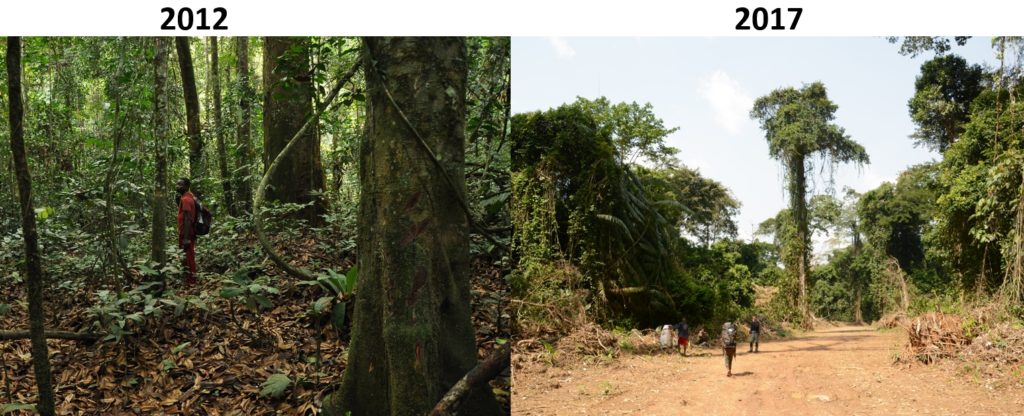
Industrial logging and mining are a major problem in Central Africa. I have personally seen how a site in the Congo has changed in five years. Foreign companies have started logging and mineral extraction and in some places have turned the habitat from pristine forest into ruins. Local human populations gained better roads, but lost much of their forest, which they used for sustainable traditional hunting and gathering of herbs. Large animals, including the iconic gorillas and elephants, have disappeared from their forests, and the diversity of small animals such as amphibians has also declined.